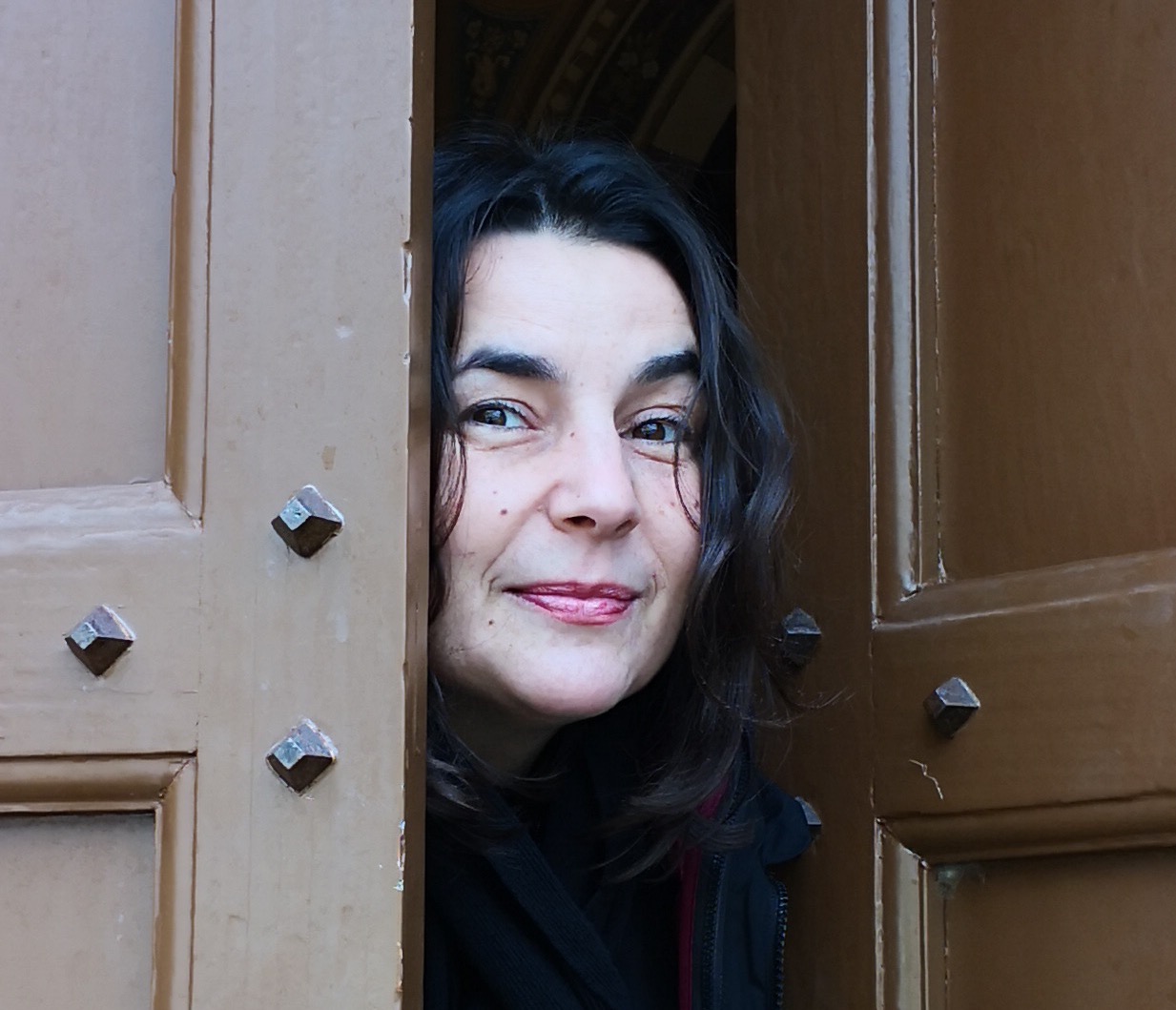
This post is a guest blog by the celebrated Italian writer Giulio Mozzi. For a full bio of Giulio, please see below.
Whenever a writer is interviewed, it’s almost a given that they’ll be asked questions like:
“What books or writers have shaped you?”
“Who are your favorite writers?”
“What books are always on your bedside table?”
 |
| Giulio Mozzi |
But I’d like to ask the opposite question: “What or who are the books or writers you just can’t stand, the ones that make you think, ‘I’d like to write a bit like everyone, but definitely not like them’”?
The history of literature, especially the history of modern literature, can be seen as the story of every generation's revolt against the previous one. The revolt of the naturalists against the sentimentality of the romantics, the revolt of the symbolists against the naturalists, the revolt of the futurists against everyone, the revolt of the new narrative writers against the rebellions of the neo-avant-gardists, the revolt of the postmodernists against the new narrative writers, etc. Generations follow one another; sons kill their fathers; daughters search for their mothers: it’s a continuous progression.
So: I believe that in the formative history of every writer, it’s important not just to love certain works but to hate others.
In the years when writing first hovered around me or within me (your choice!), and I hadn’t yet written much but was about to, my love for Marco Lodoli’s short story collection Grande Raccordo or—and to a lesser, though decisive extent—Pier Vittorio Tondelli’s Separate Rooms—were both undoubtedly important for me. But equally important was my hatred, my truly furious hatred, for Andrea De Carlo’s Techniques of Seduction.
It's easy to dislike writers whose books are just bad, sloppy, or commercial. By commercial, I don’t mean mere entertainment—that’s something different. It’s all too easy to tear apart the writing of a romance novelist like Rosamunde Pilcher, for example. That’s not what I’m talking about. I’m talking about the hatred that can arise toward a true writer, whose seriousness, artistic quality, technical ability, and historical importance can’t be denied; but is someone whose work is not only unbearable to you—they serve almost as a reverse fetish.
I’ve always wondered why I can't stand male English novelists (I mean English-English: Irish and Scottish are another matter entirely). Of course, there are exceptions (Henry Fielding! Charles Dickens!), but in general, when I try to read those writers, after a while I say to myself: “I just can’t do this.” Among contemporary writers, for example, I read Ian McEwan (who, despite his last name, isn’t Scottish) and I say to myself, “He’s so good! And such a pain in the ass!” Not to mention the Victorian writers en masse (and the related films by James Ivory). On the other hand, Jane Austen, Jonathan Swift, Bram Stoker, Virginia Woolf, Joseph Conrad, Samuel Beckett, James Joyce, Salman Rushdie, etc.—I like them all.
Among the obligatory granddaddies of today’s Italian writers, I see Alberto Moravia and Italo Calvino mentioned over and over. It gets on my nerves that those two are talked about so often. I no longer know what to do with Calvino: it seems downright scandalous to me that a writer with such a modest, narrow, and stunted idea of literature was such a powerful editor. His American Lectures is an amazingly unimportant book. As for the Moravia, I appreciate his revolt against D’Annunzio-ism (even though I love Gabriele D’Annunzio’s poetry). But I confess that Moravia’s most celebrated novels (especially The Conformist) have always seemed obtusely ideological to me and nothing more. The Moravia who forgets he’s Moravia, on the other hand, as in Roman Tales, is very, very beautiful.
Please note: these are not critical judgments. They’re my reactions in a particular mood, my character traits. I don’t claim any validity for them. I would never argue that Calvino and Moravia should be removed from anthologies. Just the opposite! But maybe for the anthologies, I wouldn’t choose the usual pieces.
I believe that when you start to become what you are, you also become that through opposition. Through what you reject. Through hatred, even.
I’m a little frightened, for example, by certain students of mine, who seem to universally love all great literature. “Is that even possible?” I’d like to ask them. “Is it possible that between the classic Italian epic poets Ludovico Ariosto and Torquato Tasso, you like them both exactly the same? Is it possible that you love Leopardi as much as Manzoni?” I can’t. Tasso is beautiful, but I love Ariosto. Leopardi wrote a few sublime poems, but I love Manzoni. Reading Morante’s Lies and Sorcery or her Arturo’s Island is a wonderful adventure, but I love Balestrini’s Tristano!
The history of literature, especially the history of modern literature, can be seen as the story of every generation's revolt against the previous one. The revolt of the naturalists against the sentimentality of the romantics, the revolt of the symbolists against the naturalists, the revolt of the futurists against everyone, the revolt of the new narrative writers against the rebellions of the neo-avant-gardists, the revolt of the postmodernists against the new narrative writers, etc. Generations follow one another; sons kill their fathers; daughters search for their mothers: it’s a continuous progression.
So: I believe that in the formative history of every writer, it’s important not just to love certain works but to hate others.
In the years when writing first hovered around me or within me (your choice!), and I hadn’t yet written much but was about to, my love for Marco Lodoli’s short story collection Grande Raccordo or—and to a lesser, though decisive extent—Pier Vittorio Tondelli’s Separate Rooms—were both undoubtedly important for me. But equally important was my hatred, my truly furious hatred, for Andrea De Carlo’s Techniques of Seduction.
It's easy to dislike writers whose books are just bad, sloppy, or commercial. By commercial, I don’t mean mere entertainment—that’s something different. It’s all too easy to tear apart the writing of a romance novelist like Rosamunde Pilcher, for example. That’s not what I’m talking about. I’m talking about the hatred that can arise toward a true writer, whose seriousness, artistic quality, technical ability, and historical importance can’t be denied; but is someone whose work is not only unbearable to you—they serve almost as a reverse fetish.
I’ve always wondered why I can't stand male English novelists (I mean English-English: Irish and Scottish are another matter entirely). Of course, there are exceptions (Henry Fielding! Charles Dickens!), but in general, when I try to read those writers, after a while I say to myself: “I just can’t do this.” Among contemporary writers, for example, I read Ian McEwan (who, despite his last name, isn’t Scottish) and I say to myself, “He’s so good! And such a pain in the ass!” Not to mention the Victorian writers en masse (and the related films by James Ivory). On the other hand, Jane Austen, Jonathan Swift, Bram Stoker, Virginia Woolf, Joseph Conrad, Samuel Beckett, James Joyce, Salman Rushdie, etc.—I like them all.
Among the obligatory granddaddies of today’s Italian writers, I see Alberto Moravia and Italo Calvino mentioned over and over. It gets on my nerves that those two are talked about so often. I no longer know what to do with Calvino: it seems downright scandalous to me that a writer with such a modest, narrow, and stunted idea of literature was such a powerful editor. His American Lectures is an amazingly unimportant book. As for the Moravia, I appreciate his revolt against D’Annunzio-ism (even though I love Gabriele D’Annunzio’s poetry). But I confess that Moravia’s most celebrated novels (especially The Conformist) have always seemed obtusely ideological to me and nothing more. The Moravia who forgets he’s Moravia, on the other hand, as in Roman Tales, is very, very beautiful.
Please note: these are not critical judgments. They’re my reactions in a particular mood, my character traits. I don’t claim any validity for them. I would never argue that Calvino and Moravia should be removed from anthologies. Just the opposite! But maybe for the anthologies, I wouldn’t choose the usual pieces.
I believe that when you start to become what you are, you also become that through opposition. Through what you reject. Through hatred, even.
I’m a little frightened, for example, by certain students of mine, who seem to universally love all great literature. “Is that even possible?” I’d like to ask them. “Is it possible that between the classic Italian epic poets Ludovico Ariosto and Torquato Tasso, you like them both exactly the same? Is it possible that you love Leopardi as much as Manzoni?” I can’t. Tasso is beautiful, but I love Ariosto. Leopardi wrote a few sublime poems, but I love Manzoni. Reading Morante’s Lies and Sorcery or her Arturo’s Island is a wonderful adventure, but I love Balestrini’s Tristano!
So, ask yourself: if you write, when you write, against whom or what do you write? What or who do you want to be absolutely different from?

_________________________________
Zack’s new book of poetry, The Kama Sutra for Senior Citizens and Other Poems on Aging. Order in the USA Order in the UK
Zack’s most recent translation, The Water Drinkers and Other Sketches of Paris in the Romantic Era by Henry Murger
Other posts of interest:
Getting the Most from Your Writing Workshop
How Not to Become a Literary Dropout
Putting Together a Book Manuscript
Does the Muse Have a Cell Phone?
Poetic Forms: Introduction, the Sonnet, the Sestina, the Ghazal, the Tanka, the Villanelle