Showing posts with label Jane Smiley. Show all posts

Saturday, September 18, 2021

Valerie Miner on the Novella

I heard the writer Valerie Miner give a fascinating talk on the novella form, and I asked Valerie to talk about her experience as an author and reader of novellas. Valerie’s latest book of fiction, Bread and Salt, features a wonderful novella.


Valerie Miner


Could you explain what a novella is? When does a work of fiction go from being a short story to a novella, or when is a novel brief enough that it is considered a novella?


Valerie Miner: I sometimes imagine different forms of fiction like the music of string instruments. I hear the short story as a winged, breathless violin scherzo. The novella sounds like a cello sonata, rich and round and deep. The novel reminds me of the seasons of a string quartet. Of course, there are no rules about length. But my stories are usually between 5-25 typed pages. In writing a novella, I aim for 60 to 120 typed pages. My novels tend to be 250 to 500 pages.


What is the appeal and/or advantage of writing a novella? Are there disadvantages to writing a novella?    


I enjoy the flexibility and length of a novella. It can reveal more than a personal epiphany but usually less than the whole map of an individual adult life. I find the form ideal for exploring friendship. Jane Smiley thinks that marriage is a good topic: “...few marriages and even fewer love affairs are worth three hundred pages—but a hundred? Great loves can go a hundred.”


I enjoy reading and writing novellas in much the same way I enjoy other anomalous forms—the prose poem, the novel-in-stories, microfiction—because their very irregularity provokes my imagination. The shape of this less familiar form disturbs my ability to maintain expectations about character and plot development. Also fascinating are those cross-genre projects mixing fiction and memoir. Neither the novella nor these other “unconventional” forms are endangered species, and hybrid forms are steadily gaining audiences. Just as writers breaking linguistic and other stylistic expectations often have to establish a critical framework in which their own fiction can be appreciated, practitioners of “odd forms” like the novella need to alert readers to the novella’s idiosyncratic rewards. It’s the idiosyncrasy of the novella form, its perversity and disruptiveness, that stirs ideas and changes literary appetites.


The disadvantages of writing a novella are perhaps most related to reception. It’s difficult to publish them in literary journals. I’ve had the opportunity to judge novella contests for Quarterly West and Evergreen Chronicles, but most journals are looking for something shorter.


Unfortunately, most people haven’t yet developed the habit of reading novellas as they might read one short story a day over breakfast or in bed, or as they might savor a novel on a week’s vacation. For many, the novella clashes with daily routine. Habit is what holds back the popularity of the novella. We carry expectations about stories and novels regarding degrees and kinds of emotional response or intellectual stimulus. But novellas—what are they? Less intense than a story? Less profound than a novel? Or something altogether different?


In your recent collection of fiction, Bread and Salt, you end with the title piece, which is a novella. How and when did you know that this idea would take the form of a novella?


My favorite form is the short story. So why have I published only four story collections and nine novels? Perhaps because I’m too curious about characters’ back stories and their futures, so I keep writing and the piece grows.


“Bread and Salt” started out as a short story. I was caught up with two complex people, Caroline and Anouar. I always begin writing with questions. In this case I wanted to think about the difference between glancing appearance and reality. I wanted to explore Caroline and Anouar’s identities as travelers and their distinct experiences with colonialism. And given all this, the story had to take place on three continents. It’s hard to write briefly about places I love, like Paris and parts of Tunisia. So, the more I wrote, the more questions I considered, and the longer the story became. I believe stories find their own shape. In this case, the narrative became a novella.


“Bread and Salt,” is a love story about a North American woman and a North African man that takes place over a period of almost 30 years. The novella is set in Tunisia, Paris, and Boston. What were the challenges of taking your characters through such an expansive time period and geography in only 42 pages?


I don’t set stories in places I don’t know. But “knowing” and “knowing enough” to fully evoke a place are two different things. The more I wrote about Tunisia (where I did a Fulbright in 2004) and Paris (a place where I’ve worked and visited since my early 20s), the more details I needed to include. Since the novella takes place over a number of years, I had to remember, imagine, research these places during different decades. The novella took about ten years to write.


What are a couple of your own favorite novellas, and why do you think they work well in that genre?


Just a couple? I’m a fan of Ordinary Love by Jane Smiley, Thea Astley’s Vanishing Points, Randall Kenan’s Let the Dead Bury Their Dead, Alexander Solzhenitsyn’s One Day in the Life of Ivan Denisovich, Michael Cunningham’s Specimen Days, and Cris Mazza’s Therapeutic. I imagine that each of these authors took a winding route similar to my own, one that posed more questions, demanded more answers and wound up taking them to the length of a novella.


One thing I love about the novella, and literature in general, is that it is a portable and, in some senses, more intimate medium than film or opera or theatre. We carry books with us into our most private rooms, dressed—or undressed—as we like.

I encourage my students to play with the novella as readers and writers. It might stimulate short story writers to discover what would happen if they gave themselves more space. The novelists might find it a useful exercise in distillation or excision. We see what the novella teaches us about other forms as well as discover whether it’s a form in which we want to write for a while.

Other posts of interest:

How to Get Published

Getting the Most from Your Writing Workshop

How Not to Become a Literary Dropout

Putting Together a Book Manuscript

Working with a Writing Mentor

How to Deliver Your Message

Does the Muse Have a Cell Phone?

Why Write Poetry?

Poetic Forms: Introductionthe Sonnetthe Sestinathe Ghazalthe Tankathe Villanelle

Praise and Lament

How to Be an American Writer

Writers and Collaboration

Types of Closure in Poetry

Saturday, September 10, 2016

How to Be an American Writer, Part 8: Satirists and Critics

The last approach to being an American writer that I’d like to discuss is the satirist or the critic. These writers do engage directly with the American mainstream, unlike the expatriate or the internal exile, for instance. But the critics and satirists paint the United States in order to hold up a mirror and show the blemishes, often to hilarious effect.

I’d say the best known U.S. writer satirist/critic is Mark Twain, who had an uncanny ability to mimic the speech and the foibles of the common man or woman.

One of my favorite parts of Twain’s The Adventures of Huckleberry Finn is his portrayal of Tom Sawyer’s gullible Aunt Sally. Aunt Sally is trying to figure out how the leg of the bed in Jim’s prison was sawed off, when Jim was locked in a room with no saw. In reality, Tom Sawyer did the sawing—is that a pun? Here is Aunt Sally’s description of the situation:

“You may well say it, Brer Hightower!  It’s jist as I was a-sayin’ to Brer Phelps, his own self.  S’e, what do you think of it, Sister Hotchkiss, s’e? Think o’ what, Brer Phelps, s’I?  Think o’ that bed-leg sawed off that a way, s’e?  think of it, s’I?  I lay it never sawed itself off, s’I—somebody sawed it, s’I; that’s my opinion, take it or leave it, it mayn’t be no ’count, s’I, but sich as ’t is, it’s my opinion, s’I, ‘n’ if any body k’n start a better one, s’I, let him do it, s’I, that’s all.”

What a gift for rendering the Mississippi Valley dialect Twain had! As much as Twain makes fun of the common man and woman, though, and the gullibility of Americans, you do get the sense that he is in some ways a populist. His poking fun is often done out of a democratic impulse to nudge the masses toward greater awareness, and not out of a deeper cynicism about the U.S.

Other notable American satirists or critics:

On the poetry side, Edward Arlington Robinson, author of “Miniver Cheevy.” Robinson had a knack for finding the underside of different fates. 

e.e.cummings, particularly in poems such as “pity this busy monster, manunkind,” showed the materialistic and insensitive face of U.S. society. 

On the fiction side, Sinclair Lewis, a novelist whose work was extremely important for my parents’ generation. Lewis, one of the few Americans to win the Nobel Prize for Literature, is not read as much today as he was two generations ago, but he produced some scathing satires of small-town American life, including the novels Babbitt and Main Street. His dystopian fiction about fascism taking over an all-American community, It Can’t Happen Here, published in 1935, might well be a prophetic glimpse at the regional surge of extreme right politics outside of urban America.

Sinclair Lewis, author of It Can't Happen Here and other novels
NathanaelWest, author of Miss Lonelyhearts, mocked the shallowness of popular American culture.

I think some of the recent American women novelists are critics of American society, such as Jane Smiley, author of A Thousand Acres, and the excellent novellas, Ordinary Love & Good Will, which both shine a flashlight on tender spots in American culture. 

There’s also Jane Hamilton, who wrote the novel A Map of the World, a scathing critique of the prejudices and limitations of Middle America—in the world of that novel, if you make one false move, you become an anathema.

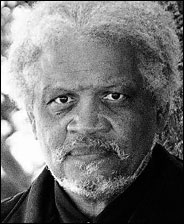
Ishmael Reed is a wonderful satirist who critiques American society with African American funk in mind in such novels as Mumbo Jumbo. Reed is also a poet, essayist, and playwright, one of the few writers who excels in all those genres.


Ishmael Reed, author of Mumbo Jumbo and many other books
We could add to the satirists John Kennedy Toole, who wrote A Confederacy of Dunces (a book I’ve never been able to finish, I have to admit).

In the nonfiction category, there’s Tom Wolfe, who pokes fun at the American intelligentsia and other aspects of U.S. life in such books as Radical Chic & Mau-Mauing the Flak Catchers and The Painted Word.

The satirist or critic challenges the American mainstream. Unlike the populist writer, he or she doesn’t see the U.S. experience as a source of wisdom or epiphanies about the meaningful, small moments of everyday life. Critics and satirists are taking aim at American society, often with either a humorous or reformist intent, but highlighting the sides of U.S. culture that are deserving of scrutiny or even mockery.


Thursday, March 1, 2012

Tips for the AWP Conference, Picks for Friday, March 2


These are one poet’s personal and quirky picks for events for the AWP conference in Chicago in 2012. I’ve highlighted presenters I’ve seen in the past or topics that seem interesting to me.

9:00–10:15 AM. Literature and the Internet in 2012. The panelists are all editors of Internet magazines, so this might have substance. Grand Ballroom, Palmer House.

10:30–11:45 AM. Graywolf Press Reading. Includes D.A. Powell and Albert Goldbarth, both very worth hearing. International Ballroom South, Hilton Chicago.

10:30–11:45 AM. On the Move: Contemporary African American Women’s Literary Fiction. I don’t know the panelists, but it sounds promising. State Ballroom, Palmer House Hilton.

Noon–1:15. Why We Need a WPA for the 21st Century. It’s probably a pipe dream, but hey, pass the pipe! Wabash Room, Palmer House Hilton.

1:30–2:45 PM. National Book Critics Circle Celebrates Award-Winning Writers. You get to hear Jane Smiley and Jennifer Egan. Hard to beat. Grand Ballroom, Hilton Chicago.

3:00–4:15 PM. A Reading and Conversation with Luis J. Rodriguez and Dagoberto Gilb. Luis Rodriguez is a wonderful reader. I bet this will be a winner. Grand Ballroom, Hilton Chicago.

4:30–5:45 PM. Arab and Arab American Feminism. Good topic, and it features Youmna Chlala, who is very worth hearing. Lake Erie, Hilton Chicago.

4:30–5:45 PM. A Reading and Conversation with C.K. Williams. Hugely original poet who doesn’t appear that often in the U.S. Grand Ballroom, Hilton Chicago.

8:30–10:00 PM. A Reading and Conversation with U.K. and U.S. Poets Laureate Carol Ann Duffy and Philip Levine. Sounds terrific. Philip Levine is a living legend. International Ballroom North and South, Hilton Chicago.

Zack Rogow will be signing copies of his new book, My Mother and the Ceiling Dancers, at the Kattywompus Press table (bookfair booth 721) at the AWP conference in Chicago on Friday, March 2, 2012 from noon to 1:00 p.m. His play, Things I Didn’t Know I Loved, about the Turkish writer Nazim Hikmet, will be given a staged reading at AWP on Saturday, March 3 from 1:30 to 2:45 p.m. in room Wiliford A, Hilton Chicago, 3rd floor.