Showing posts with label Brothers Grimm. Show all posts

Friday, February 11, 2022

My Love-Hate Relationship with German Language and Culture

“Never turn your back on a German,” my Jewish mother used to tell me growing up. She had lived through the time of the Holocaust, though she’d been lucky enough to reside in North America then, with the Atlantic Ocean a moat between her and the Nazis. But her generation of Jews knew what it meant to fear Germany, to know that if Germany won World War II, she would probably be murdered.


My mother also swore that, “I’ll never set foot on German soil.” In 1968, that vow was tested when she and I drove with French friends across Germany to get from Paris to Romania. My mom declared she would never leave the car. When we stopped for dinner in Baden-Baden, she stayed behind, ironically in our friends’ Volkswagen.
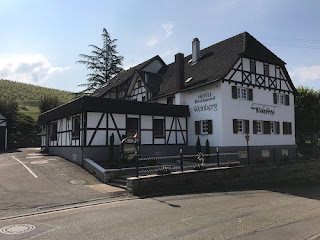


The rest of us were in the dining room, enjoying our dinner, when my mother joined us, reluctantly. “If I wasn’t so hungry, I’d have stayed in the car,” she grumbled. My mom ordered
Kartoffelpuffer, potato pancakes, which she gulped down, enjoying every bite. “It’s just like latkes,” she joked, the food that Jews eat to celebrate the festival of Chanukah.

Many of the well-dressed Germans in the restaurant where we were dining were my mother’s age, old enough to have lived through World War II, or to have fought for the Nazis. She looked at them and said to us, “What were they doing during the war?” Good question. The horrors of World War II and the Holocaust provoke many questions about how a country like Germany that has given the world so much beauty and culture could commit atrocities that took so many millions of lives.


Is it surprising that my mother’s demonizing of Germany made me want to learn more about that country, its language, and its culture? My mother turned Deutschland into a kind of forbidden fruit. She was so intent on teaching me to hate Germany, that I felt I had to make up my own mind about that country.


Some of my first positive experiences with Germany happened when I was in college, studying literature and philosophy. I continually came across references to German culture. I’m a leftist, and so much of the story and of the ideas of the Left come from Germany and Austria. starting with Hegel’s dialectic.
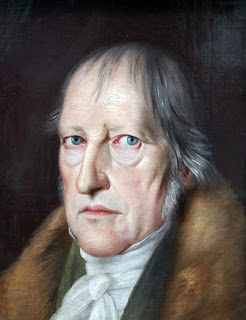

German philosopher Georg W.F. Hegel

Not to mention Marx’s famous statement, “Nicht das Bewußtsein bestimmt das Leben, sondern das Leben bestimmt das Bewußtsein.”—“Consciousness doesn’t determine life; it’s life that determines consciousness.” How true, but how many exceptions there are, too!


Then there was the German philosopher Martin Heidegger’s tantalizing use of the word Dasein, which literally means “existence,” but is made up of the words da, there, and sein, being. In other words, existence is about being there or being present in a certain place and time. How could I understand that elaborate wordplay and its deep resonances without knowing German?


So I began studying German in college. To my surprise, I already knew quite of a few of the words. I had to laugh one day in class when we learned the verb “to drag” in German, which is schleppen. Every Ashkenazi Jew knows what it means to schlep in Yiddish, to drag yourself from one place to another, as in, “Can you believe I had to schlep all the way to Brighton Beach to get a decent knish?”


Likewise, the German word Kinder, children, already meant a great deal to me, because my very Jewish mother would call me and my sister to dinner with the Yiddish word Kinder. It dawned on me that there was a deeper connection between Jews and Germans than my mother had let on. As a friend of mine once put it, “German is a dialect of Yiddish.”


The abrasive tones of the German language still reminded me, though, of those World War II movies where the prisoner of war camp Commandant barked orders in the harshest tones: “Mach schnell!”


One year of college German did not get me to a point where I could really read and speak the language. I had to go to the belly of the beast to develop any fluency. The year my mother died, when I was 20 years old, I traveled to Germany to study in a Goethe-Institut with its intensive German language program where students stay with German families.


I was assigned to a school in a little town in Bavaria called Grafing, almost at the end of a Munich subway line that was newly finished just in time for the Olympics that were to take place that summer of 1972. Grafing turned out to be a strange bubble in time, a village that was like the set of a Richard Wagner opera.
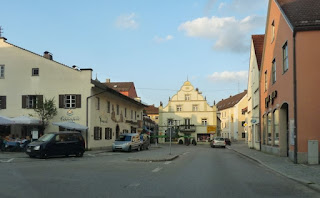

Grafing, Bavaria, Germany
The town had its own brewery that supplied great beer to the locals. Grafing also boasted an amazing bakery strategically located right across the street from the Goethe-Institut. During breaks we ate freshly baked warm Brezeln (pretzels), or Prinzregententorte with its endless layers of chocolate buttercream and sponge cake.

All the students in our program were housed in German homes. Many of the young people from the U.S. reported that they had practically been adopted by their host families. I hardly ever saw mine. The couple I was living with had a newborn who took up all their free time. The American students I spoke to also reported that the families they were staying with made nostalgic comments about how much better things were under Hitler—rural Bavaria was a Nazi stronghold. It didn’t help that, to promote tourism, the Munich city government was encouraging Frauen to wear Dirndls and Männer to wear Lederhosen one day a week, turning the whole city into something out of a third-rate Third Reich propaganda film.


One night a friend from the program and I escaped to the outskirts of our little village and smoked a pipe of hashish that he had scored in the Englischer Garten (the English Garden), headquarters for German hippies in Munich. We were stoned out of our minds when we remembered that one of our teachers at the Goethe-Institut was giving a recital that evening of fairy-tales from the Brothers Grimm. We went back to the school and walked in when the teacher had just begun a story.

Once we settled into our seats, we realized that the instructor was reciting from memory the entire story of Cinderella—Aschenputtel in German. Don’t judge the German language until you’ve heard one of Grimm’s fairy-tales in German. It’s so much more magical than the Disney version. The language is as musical as Beethoven’s Pastoral Symphony—it sweeps you along. In the original version, when the Fairy Godmother creates a dress for Cinderella, Cinderella has to speak a magic spell to a tree, a detail that Disney sadly deleted. Cinderella says,


    “Bäumchen, rüttel dich und schüttel dich, wirf Gold und Silber über mich.”


    Little tree, shake yourself, wake yourself, toss gold and silver over me.


The sounds of that fairytale are so soft, the consonants pillowed by the sibilant “ch” and “s” sounds. The rhymes clink so clearly. And the story is familiar. Not foreign in the least.


Those same qualities that I heard that night in the basement assembly room of a little school in Bavaria I found again when I read in German the gorgeous poetry of Rainer Maria Rilke:


    If only once it would be completely still.

    If that “Almost!” and “Why me?” will

    just this time fall silent—and the laughter

    next door—if my whirring senses didn’t keep after

    me, hobbling me from watching as I ought—


    (translation by Zack Rogow)
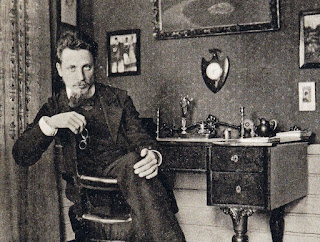

Rainer Maria Rilke

I realized the German I had been fed as a child was only a caricature of that country’s culture, a caricature that admittedly the Germans themselves contributed to making. 

I feel incredibly fortunate that I have lived long enough to see Germany go from one of the worst dictatorships in history and an engine of global intolerance to a lighthouse for democracy and for accepting refugees. I wish my mother could have lived long enough to see today’s Germany. And I also wish Germany’s Jewish citizens could have lived long enough to see it.

_________________________________
Zack’s new book of poetry, The Kama Sutra for Senior Citizens and Other Poems on Aging. Order in the USA    Order in the UK
Other posts of interest:

How to Get Published

Getting the Most from Your Writing Workshop

How Not to Become a Literary Dropout

Putting Together a Book Manuscript

Working with a Writing Mentor

How to Deliver Your Message

Does the Muse Have a Cell Phone?

Why Write Poetry?

Poetic Forms: Introduction, the Sonnet, the Sestina, the Ghazal, the Tanka, the Villanelle

Praise and Lament

How to Be an American Writer

Writers and Collaboration

Types of Closure in Poetry

Monday, April 30, 2012

Learning from Rilke, Part 1

Rainer Maria Rilke (1875–1926) is a poet so intriguing and complex that even a brief biographical summary of his life is difficult to sketch. Basic facts such as his nationality and the language he wrote in are up for grabs. He was born in Prague in what is now the Czech Republic. Prague was then part of the Hapsburg (Austrian) empire. Rilke’s family was among the ten percent of Prague whose native tongue was German, not Czech. But after writing in German for most of his career, Rilke moved to Switzerland towards the end of his brief life and recreated himself as a French poet.


One of my favorite works by Rilke is a short poem he wrote in his early twenties. Rilke published the untitled poem, “If only once it would be completely still…” in his first important collection, The Book of Hours, actually a series of three books he wrote in the persona of a Russian monk speaking directly to God. In the late nineteenth century, many artists and intellectuals, inspired by the works of the great novelist Leo Tolstoy, looked to Russia as the wellspring of spiritual authenticity.

Here’s a very free translation I did of the Rilke poem, keeping fairly close to the original rhyme scheme. The German original follows:

If only once it would be completely still.
If that “Almost!” and “Why me?” will
just this once fall silent—and the laughter
next door—if my whirring senses didn’t keep after
me, hobbling me from watching as I ought—:

Then in a thousand-faceted thought
I could think every one of your features
and possess you (as my smile cranks
wide open), to give you to all living creatures
like a thanks.

(translation © 2012 by Zack Rogow)

Wenn es nur einmal so ganz stille wäre.
Wenn das Zufällige und Ungefähre
verstummte und das nachbarliche Lachen,
wenn das Geräusch, das meine Sinne machen,
mich nicht so sehr verhinderte am Wachen—:

Dann könnte ich in einem tausendfachen
Gedanken bis an deinen Rand dich denken
und dich besitzen (nur ein Lächeln lang),
um dich an alles Leben zu verschenken
wie einen Dank.

In this short poem Rilke attempts nothing less than a consciousness beyond everyday life. Then he turns that meditative openness into a compassion for all living creatures. For a poem spoken by a Christian monk, it’s a surprisingly Buddhist notion, especially for Europe in 1899, when this poem was published.
Rilke accomplishes these transformations partly by changing the very sound of the German language. We often think of German as being the language of the Kommandant barking rough and harsh orders. Rilke softens the syllables of German in this poem until the words feel almost whispered. No other German I’ve heard approaches this silkiness, except the magic spells in the fairy tales told by the Brothers Grimm.
Try listening to the poem in German. There are several YouTube versions of it, but this is my favorite. Ignore the schmaltzy background music.
In this ten-line poem, Rilke finds numerous ways to use the “ch” combination in German, an aspirated sound that is gentle and tender, using it three times in the space of two words: das nachbarliche Lachen— “the laughter next door.” He uses the “ch” three times again in the phrase dich denken/und dich besitzen (nur ein Lächeln lang): literally—“to think you/and possess you (only as long as a smile lasts).”
Wherever in this poem he uses a hard consonant sound like a “t” or a “k,” he almost always pillows it with a softer consonant before, such as an “s” or an “r” or an “n,” and follows it afterwards with a buffering vowel, an “e” or sometimes an “i” that prevents a hard landing, as in these words: stille, verhinderte, denken, verschenken. A translator can do little to imitate this command of language except to mention it in a note like this. I have tried to mirror the rhymes in my translation, another aspect of the poem’s spell-like language.
The soothing language Rilke uses builds surprisingly to a moment where the speaker talks to God using the intimate “du” pronoun. In a turn right out of the Baroque linking of the spiritual and sensual, like Bernini’s erotic-spiritual altar, The Ecstasy of Saint Theresa, the speaker of Rilke’s poem says he wants to possess God like a lover.
Writers can learn from this poem that even the sound of our language is not a given. A poet or prose writer can mold language, transfigure it, like a sculptor moving clay. The states of mind that we are taught are normal are not a given either. Rilke shows us we can also change those through writing.

Other recent posts about writing topics:
Learning from Rilke, Part 2: "Archaic Torso of Apollo"; Rilke's "Autumn Day"