Saturday, June 11, 2022

Embracing Your Darkest Hour: An Interview with Poet Michelle Bitting

This blog is an interview with the writer Michelle Bitting, whose book Nightmares & Miracles, winner of the Two Sylvias Press Wilder Prize, establishes her as an important voice in poetry.

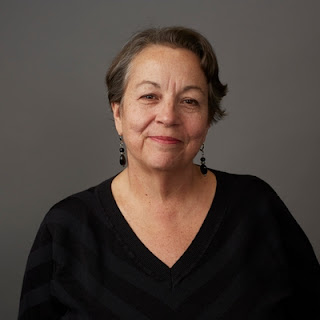
Poet Michelle Bitting
Zack Rogow: In Nightmares & Miracles, you turn to a number of stories from your childhood and your family history. What was it that made that material so urgent or so possible to explore at this moment in your life and your development as a writer?

Michelle Bitting: When writing, we all experience the “eternal return” to childhood matters—memories, sensory impressions, snippets of recollected gesture and dialogue. As a writer, I’ve been working through a fair amount of trauma and dysfunction from the distant past since I started making poems a couple decades ago.


To be blunt and to the point: twenty-five years after my older brother William committed suicide, my younger brother John took his life as well. This latest tragedy occurred in December of 2019, the day after Christmas, and at our parents’ house. In attempting to get at the molten center of that, I’m also trying to free myself from it, or at least transform it into song outside myself. I’m not sure I’d still have the passion and joy for life I hold now if I hadn’t surrendered to this activity, which feels almost mystical to me. When I lost my younger brother by suicide recently, it was (again) a terrible, shocking thing. I had to don the mask and suit and absurd flippers and dive back down.


Q. One of the poems in your collection is titled, “A Poet Embraces the Darkest Hour.” To me, that could be a description of this whole book. What is it that a writer gains by embracing the darkest hour?


Wouldn’t it be great if we didn’t have to keep embracing the darkest hour? I would really love that. I think we could all use a grand break, don’t you? Along with each personal trial (and mine, in relation to the wide world of suffering humans are bearable by comparison) it feels, of late, like a constant barrage of outrageous torments chipping away at our collective serenity. And sanity! But on we endure, and I try to expand beyond my particular suffering into new articulations that have to do with making stories, or mythologizing, if you will. Crawling through the tunnels with my flashlight I find stuff that glows and helps me figure my way forward. I remember I’m a dot in time puzzling the “facts” and past into something that helps me embrace the chaos while also organizing it in a way through language, image, sound. To state the obvious, and to quote Carl Jung: “There is no light without shadow, and no psychic wholeness without imperfection.”


Q. The nightmare-like experiences you talk about in your book seem to enable the miracles that you describe in such a dazzling way—I’m thinking, for example, of your poem “The Unmaking” about going with a child to put a pet to sleep at the vet’s, a poem that ends in such a moving way. Could you talk about the dialectic and the interplay between nightmares and miracles?

The “flip side” of the nightmare portion of life, the sense of “miracle” is often the glorious, astonishing feeling of having survived horrible derangements and despair—the terror of what came before. I know this sounds awfully dramatic, but having experienced a fair amount of violence, sustained psychological stress, and volatility in my family environment (s) over the years, making it through those passages delivers a euphoria, a deep gratitude and delight in the smallest “things” that are often of the spirit and not necessarily concrete. We may be battle-weary and scarred, but we’re still mighty. We get excited about life and art because these engagements are precious and necessary. Just as death is necessary. Look, I’ll never be over losing my brothers or our dog Charlie, among other brutal realities and epic failures I have to contend with in myself, my family, the world at-large. Shaping a little container of words on the matter is a positive gesture that helps soften the blow even if it hurts in the writing and remembering.


Q. Your book deals in part with the roles of women in your mother’s generation and your own. Do you see continuity or discontinuity in how the women of those two times dealt with issues of parenting and relationships?


This is a question I’m actively attempting to answer, and perhaps reconcile, in my mind and in my writing. And it connects to what we’re experiencing on the national and global levels of society, history, politics, and more. How do we “break down” and break away from the mistakes of the past, and find ways to heal, change, and forgive forward?


A major point of contention seems to be the ongoing lack of admission of wrongs done, and poor choices that continue to be made that hurt and subjugate people. At this point, I’m most concerned for the rising generations, the young people who have to somehow move valiantly into the future dragging a behemoth of economic and environmental problems that are complex, yes, but also perpetuated by older generations who continue to make greedy and heinously controlling decisions that serve their own immediate desires but certainly not the true prosperity and freedom of future generations—or civilization, for that matter.


And yet, without compassion and understanding for each other and the faults of those who came before, what are we? This predicament feels especially critical and troubling at this time of turbulent change. Well, we’re not the first to struggle through dark times. The best we can do is keep singing.


Q. Could you talk about how you are moving forward from this gripping collection of poems?


I’ve embarked on a “larger” and ongoing hybrid (fiction, memoir, script, poetry) writing project that involves my great-grandmother, the remarkable stage and screen actress Beryl Mercer. She was quite a renowned character performer of the 1930s, and considering obstacles she endured to become who she was, a feminist exemplar. I’m channeling her and imagining into various roles together as we investigate family and societal ills, as well as achievements and ongoing patriarchal damage spanning a century. For me, this is a major creative undertaking—in this case, that’s an appropriate word!


Here's one of my favorite poems from Michelle Bitting’s new collection:


The Unmaking


Where brightness goes to die

after years of settling its joy in our lap

the husk of all we prized and carried

just as my son clutched that four-pawed warmth

in his hope-stripped hands

surrendering our furry bundle

in an old blue baby blanket

Dachshund-Beagle-Chihuahua mutt

the dwindling fruit of his ruined heart

driven to the mercy hotel in the dead of night

because this suffering we could no longer abide

and so passed on to the doctor

at the all-hours clinic

a kind, white-coated vet who nodded

a solemn You’re doing the right thing

after I stammered Maybe a different medicine?

the twin neithers of her eyes meeting mine

silence dropping its dirty oars

breaking the human surface

rowing us closer

Who asks for this?

my son’s beggared hand finding me

our palms’ salt rivers twining

reading each other

our runned-over prayer

completing the circle

as we turned to find the door, the lot, our keys, our car

our way home in a vacant dark

of dreaming streets

first pocketing his collar, some paperwork

how sweetly he looked at us

as the last light left

______________________________

Zack’s new book of poetry, The Kama Sutra for Senior Citizens and Other Poems on Aging. Order in the USA    Order in the UK
Other posts of interest:

How to Get Published

Getting the Most from Your Writing Workshop

How Not to Become a Literary Dropout

Putting Together a Book Manuscript

Working with a Writing Mentor

How to Deliver Your Message

Does the Muse Have a Cell Phone?

Why Write Poetry?

Poetic Forms: Introduction, the Sonnet, the Sestina, the Ghazal, the Tanka, the Villanelle

Praise and Lament

How to Be an American Writer

Writers and Collaboration

Types of Closure in Poetry


Wednesday, May 25, 2022

Along the Robert Louis Stevenson Trail in France

Robert Louis Stevenson wrote his book Travels with a Donkey in the Cevennes in 1878 about his 140-mile (225 km) hike through the mountains and fields of central France. Stevenson’s book was prophetic—he spoke so eloquently about our need to reconnect with the natural world in the early stages of the industrial age. That was a time when most educated people were wild about machines and factories and could not yet imagine their negative consequences.

Robert Louis Stevenson, around the time he wrote
Travels with a Donkey in the Cévennes
Here’s a quote from Stevenson’s book where he talks about sleeping outdoors, a passage that gives a flavor of his worshipful attitude toward nature: “A faint wind, more like a moving coolness than a stream of air, passed down the glade from time to time; so that even in my great chamber the air was being renewed all night long. I thought with horror…of hot theatres and passkeys and close rooms. I have not often enjoyed a more serene possession of myself, nor felt more independent of material aids. The outer world, from which we cower into our houses, seemed after all a gentle habitable place; and night after night a man’s bed, it seemed, was laid and waiting for him in the fields, where God keeps an open house.”

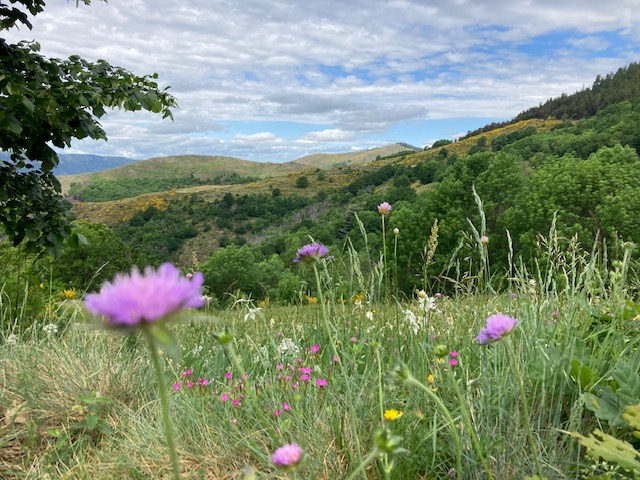
Wildflowers in the Cévennes mountains

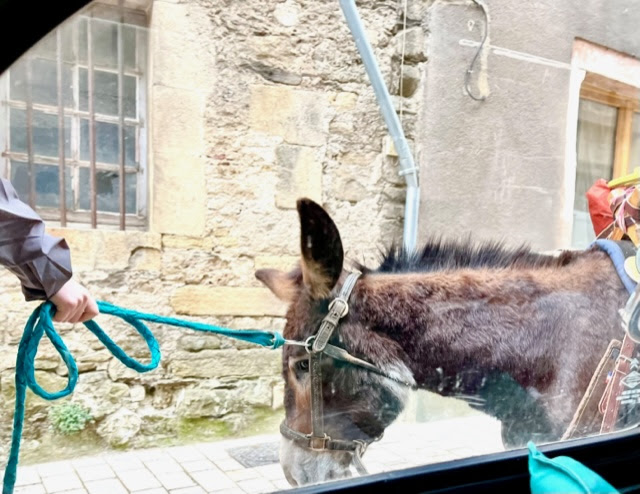
Stevenson wrote this book about his solitary interactions with nature, but Travels in the Cevennes has resonated with so many people. This slim volume has had an amazing ripple effect! Currently thousands of hikers every year retrace Stevenson’s route. A small percentage even attempt it with a donkey.

Hiker struggling with recalcitrant donkey.

The reach of Stevenson’s message has actually increased geometrically in recent years. The engines driving that were the publication of a bande dessinée (graphic novel or comic book) of Stevenson’s book in France by Juliette Lévéjac, and the recent release of a charming rom-com film My Donkey, My Lover & I (Antoinette dans les Cévennes). The film, which stars Call My Agent phenom Laure Calamy, tells the story of a school teacher who stalks her crush in the Cévennes, with a donkey as moody and lovable as Stevenson’s Modestine. Stevenson’s book has now become a cultural phenomenon in France and has inspired the hikers who follow in his path. Recently my partner and I walked three stretches of Stevenson’s path, through beautiful fields of wildflowers, up to peaks in the Cévennes mountains dusted with yellow broom and with sweeping views of green valleys, and passing by gorges of the Tarn River. We were impressed with how many hikers were walking the entire length of the trail, seeking to recreate Stevenson’s pilgrimage to nature.

Hiking near the Stevenson trail, in Bougès, France

In our own era, when our 24/7 connection to mobile phones, computers, and other devices severs us even more from the natural world, it’s not surprising that so many people want to disconnect from virtual reality and reconnect with actual reality. The extraordinary effect of Stevenson’s book a century and a half later shows how much impact an author can have over time—provided the author, like Stevenson, has foresight, authenticity, and original turns of phrase that touch the lives of others.

RESOURCES FOR HIKING THE STEVENSON TRAIL

I Love Walking in France downloadable guidebook with information about trails, places to stay, and other great information.

Sunday, April 24, 2022

Dion O’Reilly Guest Blog: Demoralization, No! Intention, Yes!

I want to admit something: I’ve been caught in an endless desire for acceptance as a writer. It began with seeking positive critiques in workshop groups and paying famous poets for feedback. Submitting my work has also stirred intense cravings to see my writing in print or online. But it has forced me to study journals, to reconnoiter the literary landscape, and to refine my poems to meet the challenge. As high as I feel when I receive a Yes, inevitably, a crash follows. That can lead to demoralization. Not only that, I’ve jonesed for better and better journals and publishers for my fix. Whenever I’m obsessively checking my emails or social media, it’s time for me to refocus on intention.


poet Dion O’Reilly
When I examine the culture of poetry, I sometimes think poets exist on a spectrum: on one end, those who rarely self-promote and quietly turn out a finely-crafted collection every seven years. On the other, poets who self-published a collection twenty years ago, and have taught high-profile creativity classes and published how-to manuals ever since. In between these poles are poets with an array of accomplishments and varying levels of social media presence. Some write essays like this one. Some teach in MFA programs. Some record and sell craft talks. Some offer podcasts or webinars.

At all spots on that spectrum, poets offer something for someone. I just want to understand where I feel comfortable—and to set my intention accordingly.


For now, my main priority is to dramatize experience, to stand at honesty’s precipice and jump. Then poetry never disappoints and is pleasurable. Even if my poems remain unpublishable, the process is satisfying, leads to greater insights, and sometimes (Hallelujah!) results in “good” poems.


The same is true of the thrill of discovering poems—it’s like finding an absorbed twin. In fact, when I don’t have an engaging book to study, I feel lost. Meeting poets, befriending poets, entering a community of poets is likewise satisfying and provides warm connections.


I don’t want to discount ambition. It moves me, motivates me, and informs me. No one’s pure. I think the trick is to be self-aware, to track what the mind is doing, dis-aggregate the information, and explore what feels valuable. For example, my mentors have followed a trajectory to impressive fame. But there are many ways to skin poetry! By remaining in my own intention, I can be both thrilled to see my poet friends achieve, and also study my vocation’s pathways. Why respect one publisher or one way over another? Why not democratize the journey?


This might seem off topic, but bear with me: In my childhood and into my twenties, I struggled with an eating disorder—an addiction really. I felt fat and ugly. But, through therapy and twelve-step programs, I strived to ignore the disparaging voices—if I couldn’t believe I was worthwhile, I could at least act like I did. I also had to reset my intention—to care for myself in order to be a better person, kinder, and more present—and not because I wanted to be hot and skinny. 


Writing’s the same: when I started out as a poet (and even now sometimes) my disparaging voice whispered, Hey, Bitch, your poems are ugly! But my better angel said: Honey! Don’t listen! Just lace up that corset and go! I realized my intention should not be to “fix” myself with recognition, not to write “good” poems, but rather to work at feeling poetry’s pleasures, to enter poetry—to resolutely craft the rawness of life—in doing so, I might become more mindful, insightful, empathetic, and content.


Besides, self-disgust—anything I feel—is worth writing about, if I can just detach a little and examine it from a new angle.


One more thing: of course I’m insecure! I’m writing poetry—it’s the opposite of engineering. Everyone knows what engineering is for! But when I say I’m a poet, people ask if I make money at it, or they complain about their high school English teacher (which I also am). Or, if they’re a poet, they might ask what press I publish with, and if it’s not Norton, they’re unimpressed. Even among other poets, reaction to my intense, “confessional” poems can be dismissive.


Yes, self-disgust originates from others—from family, society, and some peers. That’s why overcoming demoralization by honing intention is a radical act. I also think finely crafting our deepest thoughts stimulates the brain’s pleasure centers in a healthy way. The trick is to develop a greater sensitivity to poetry’s mysteries at work in our minds. And finally, I want to share this advice: be your own damn self.

Dion O’Reilly’s debut book of poems, Ghost Dogs (Terrapin 2020), was shortlisted for the Catamaran Poetry Prize and the Eric Hoffer Award. Her work appears in The Sun, Rattle, Cincinnati Review, Narrative, and other magazines. Her second book, Sadness of the Apex Predator, was chosen for the Portage Poetry Series from University of Wisconsin’s Cornerstone Press and will be published in 2024. She facilitates workshops with poets from all over the U.S. and hosts a poetry podcast at The Hive Poetry Collective. dionoreilly.wordpress.com


Dion O’Reilly’s most recent book, highly recommended!
Zack’s most recent book of poems, Irreverent Litanies

Zack’s most recent book of translations, Bérenice 1934–44: An Actress in Occupied Paris

Other posts of interest:

How to Get Published

Getting the Most from Your Writing Workshop

How Not to Become a Literary Dropout

Putting Together a Book Manuscript

Working with a Writing Mentor

How to Deliver Your Message

Does the Muse Have a Cell Phone?

Why Write Poetry?

Poetic Forms: Introductionthe Sonnetthe Sestinathe Ghazalthe Tankathe Villanelle

Praise and Lament

How to Be an American Writer

Writers and Collaboration

Types of Closure in Poetry

Saturday, March 5, 2022

How Much Should You Know Before You Start Writing

When a piece of writing involves research, you might ask yourself when you’re ready to start writing. You want to have enough background information that you can recreate the world you are studying truly. You also want to know enough that you can identify with the subject you’re writing about, and maybe even gain some insight into those lives.

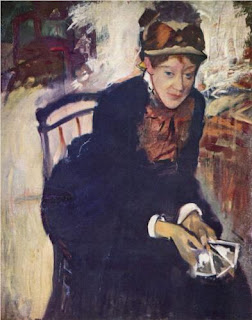
Let’s say you’re writing a short story or a poem that features the wonderful painter, Mary Cassatt. You should read at a very minimum the Wikipedia article on Cassatt. You might even read a really scholarly biography about the artist to pick out a detail here or there that will give your story the ring of authenticity. Here’s an example: it’s interesting that Cassatt, a woman artist, was good friends with Edgar Degas, a notorious misogynist.

Portrait of Mary Cassatt by Edgar Degas
The two of them sometimes even painted side-by-side. Imagine the great conversations! Think of their differing interactions with a model. If you were writing a full-length work about Mary Cassatt, a novel or a play based on her life, I would think you’d want to read multiple biographies in order to feel you were almost a Cassatt expert.

But is it possible to research a subject too much before you start writing about it? I listened to a fascinating panel on historical plays at a conference of the Associated Writers and Writing Programs (AWP) several years ago. One of the panelists, Deborah Brevoort, had been commissioned to write a play about Martha Washington, the wife of George Washington. In researching her topic before she started writing, Brevoort discovered that Martha Washington kept up a lively and extensive correspondence with her husband. Perfect material for a play, right? Unfortunately, after George Washington died, Martha burned all their letters. What a disaster! What surprised me was Brevoort’s reaction to learning this. She was actually overjoyed. I was flummoxed, till I heard her next comment: “That meant I could make it up!”

Deborah Brevoort

When I thought about that, it made a lot of sense. In order to really get inside the experience of Martha Washington, the playwright had to find deep connections between the first First Lady’s life and her own. That’s not so easy if you have so many specific facts in your head that you can’t bend your subject’s story closer to your own. To make that play work emotionally, the playwright had to make herself into Martha Washington, and Martha Washington into her, to some degree, so she could write about that other life with real understanding and empathy. And that becomes almost impossible, if at the same time, you’re juggling countless historical facts.

So, how much research is enough, and how much is too much? You’ve done too much research if the knowledge you’ve accumulated becomes so detailed and specific that it impedes your personal identification with your topic and prevents you from writing. You haven’t done enough research if you still need more details and situations to create content that is believable and compelling both to you and your audience.

Zack’s most recent book of poems, Irreverent Litanies

Zack’s most recent book of translations, Bérenice 1934–44: An Actress in Occupied Paris

Other posts of interest:

How to Get Published

Getting the Most from Your Writing Workshop

How Not to Become a Literary Dropout

Putting Together a Book Manuscript

Working with a Writing Mentor

How to Deliver Your Message

Does the Muse Have a Cell Phone?

Why Write Poetry?

Poetic Forms: Introductionthe Sonnetthe Sestinathe Ghazalthe Tankathe Villanelle

Praise and Lament

How to Be an American Writer

Writers and Collaboration

Types of Closure in Poetry

Friday, February 11, 2022

My Love-Hate Relationship with German Language and Culture

“Never turn your back on a German,” my Jewish mother used to tell me growing up. She had lived through the time of the Holocaust, though she’d been lucky enough to reside in North America then, with the Atlantic Ocean a moat between her and the Nazis. But her generation of Jews knew what it meant to fear Germany, to know that if Germany won World War II, she would probably be murdered.


My mother also swore that, “I’ll never set foot on German soil.” In 1968, that vow was tested when she and I drove with French friends across Germany to get from Paris to Romania. My mom declared she would never leave the car. When we stopped for dinner in Baden-Baden, she stayed behind, ironically in our friends’ Volkswagen.


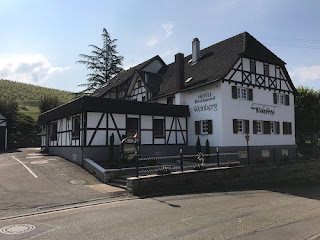
The rest of us were in the dining room, enjoying our dinner, when my mother joined us, reluctantly. “If I wasn’t so hungry, I’d have stayed in the car,” she grumbled. My mom ordered
Kartoffelpuffer, potato pancakes, which she gulped down, enjoying every bite. “It’s just like latkes,” she joked, the food that Jews eat to celebrate the festival of Chanukah.

Many of the well-dressed Germans in the restaurant where we were dining were my mother’s age, old enough to have lived through World War II, or to have fought for the Nazis. She looked at them and said to us, “What were they doing during the war?” Good question. The horrors of World War II and the Holocaust provoke many questions about how a country like Germany that has given the world so much beauty and culture could commit atrocities that took so many millions of lives.


Is it surprising that my mother’s demonizing of Germany made me want to learn more about that country, its language, and its culture? My mother turned Deutschland into a kind of forbidden fruit. She was so intent on teaching me to hate Germany, that I felt I had to make up my own mind about that country.


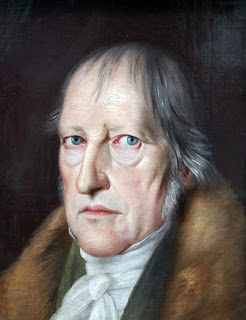
Some of my first positive experiences with Germany happened when I was in college, studying literature and philosophy. I continually came across references to German culture. I’m a leftist, and so much of the story and of the ideas of the Left come from Germany and Austria. starting with Hegel’s dialectic.


German philosopher Georg W.F. Hegel

Not to mention Marx’s famous statement, “Nicht das Bewußtsein bestimmt das Leben, sondern das Leben bestimmt das Bewußtsein.”—“Consciousness doesn’t determine life; it’s life that determines consciousness.” How true, but how many exceptions there are, too!


Then there was the German philosopher Martin Heidegger’s tantalizing use of the word Dasein, which literally means “existence,” but is made up of the words da, there, and sein, being. In other words, existence is about being there or being present in a certain place and time. How could I understand that elaborate wordplay and its deep resonances without knowing German?


So I began studying German in college. To my surprise, I already knew quite of a few of the words. I had to laugh one day in class when we learned the verb “to drag” in German, which is schleppen. Every Ashkenazi Jew knows what it means to schlep in Yiddish, to drag yourself from one place to another, as in, “Can you believe I had to schlep all the way to Brighton Beach to get a decent knish?”


Likewise, the German word Kinder, children, already meant a great deal to me, because my very Jewish mother would call me and my sister to dinner with the Yiddish word Kinder. It dawned on me that there was a deeper connection between Jews and Germans than my mother had let on. As a friend of mine once put it, “German is a dialect of Yiddish.”


The abrasive tones of the German language still reminded me, though, of those World War II movies where the prisoner of war camp Commandant barked orders in the harshest tones: “Mach schnell!”


One year of college German did not get me to a point where I could really read and speak the language. I had to go to the belly of the beast to develop any fluency. The year my mother died, when I was 20 years old, I traveled to Germany to study in a Goethe-Institut with its intensive German language program where students stay with German families.


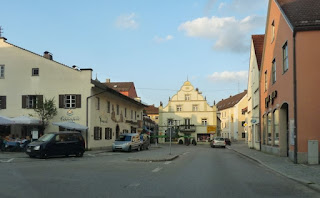
I was assigned to a school in a little town in Bavaria called Grafing, almost at the end of a Munich subway line that was newly finished just in time for the Olympics that were to take place that summer of 1972. Grafing turned out to be a strange bubble in time, a village that was like the set of a Richard Wagner opera.


Grafing, Bavaria, Germany
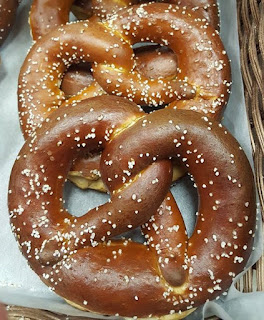
The town had its own brewery that supplied great beer to the locals. Grafing also boasted an amazing bakery strategically located right across the street from the Goethe-Institut. During breaks we ate freshly baked warm Brezeln (pretzels), or Prinzregententorte with its endless layers of chocolate buttercream and sponge cake.

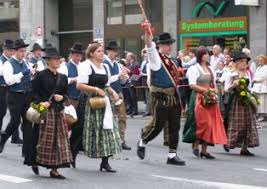
All the students in our program were housed in German homes. Many of the young people from the U.S. reported that they had practically been adopted by their host families. I hardly ever saw mine. The couple I was living with had a newborn who took up all their free time. The American students I spoke to also reported that the families they were staying with made nostalgic comments about how much better things were under Hitler—rural Bavaria was a Nazi stronghold. It didn’t help that, to promote tourism, the Munich city government was encouraging Frauen to wear Dirndls and Männer to wear Lederhosen one day a week, turning the whole city into something out of a third-rate Third Reich propaganda film.


One night a friend from the program and I escaped to the outskirts of our little village and smoked a pipe of hashish that he had scored in the Englischer Garten (the English Garden), headquarters for German hippies in Munich. We were stoned out of our minds when we remembered that one of our teachers at the Goethe-Institut was giving a recital that evening of fairy-tales from the Brothers Grimm. We went back to the school and walked in when the teacher had just begun a story.

Once we settled into our seats, we realized that the instructor was reciting from memory the entire story of Cinderella—Aschenputtel in German. Don’t judge the German language until you’ve heard one of Grimm’s fairy-tales in German. It’s so much more magical than the Disney version. The language is as musical as Beethoven’s Pastoral Symphony—it sweeps you along. In the original version, when the Fairy Godmother creates a dress for Cinderella, Cinderella has to speak a magic spell to a tree, a detail that Disney sadly deleted. Cinderella says,


    “Bäumchen, rüttel dich und schüttel dich, wirf Gold und Silber über mich.”


    Little tree, shake yourself, wake yourself, toss gold and silver over me.


The sounds of that fairytale are so soft, the consonants pillowed by the sibilant “ch” and “s” sounds. The rhymes clink so clearly. And the story is familiar. Not foreign in the least.


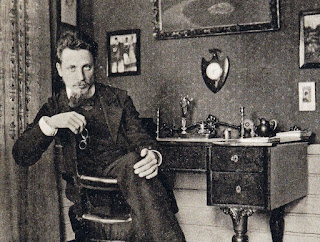
Those same qualities that I heard that night in the basement assembly room of a little school in Bavaria I found again when I read in German the gorgeous poetry of Rainer Maria Rilke:


    If only once it would be completely still.

    If that “Almost!” and “Why me?” will

    just this time fall silent—and the laughter

    next door—if my whirring senses didn’t keep after

    me, hobbling me from watching as I ought—


    (translation by Zack Rogow)


Rainer Maria Rilke

I realized the German I had been fed as a child was only a caricature of that country’s culture, a caricature that admittedly the Germans themselves contributed to making. 

I feel incredibly fortunate that I have lived long enough to see Germany go from one of the worst dictatorships in history and an engine of global intolerance to a lighthouse for democracy and for accepting refugees. I wish my mother could have lived long enough to see today’s Germany. And I also wish Germany’s Jewish citizens could have lived long enough to see it.

_________________________________
Zack’s new book of poetry, The Kama Sutra for Senior Citizens and Other Poems on Aging. Order in the USA    Order in the UK
Other posts of interest:

How to Get Published

Getting the Most from Your Writing Workshop

How Not to Become a Literary Dropout

Putting Together a Book Manuscript

Working with a Writing Mentor

How to Deliver Your Message

Does the Muse Have a Cell Phone?

Why Write Poetry?

Poetic Forms: Introduction, the Sonnet, the Sestina, the Ghazal, the Tanka, the Villanelle

Praise and Lament

How to Be an American Writer

Writers and Collaboration

Types of Closure in Poetry