Showing posts with label Virginia Woolf. Show all posts

Friday, June 5, 2015

A Plot or the Unfolding of the Characters’ Fates: Two Ways of Writing a Story

Several types of literary works have a narrative structure involving a fictional story: novels, plays, short stories, and screenplays, to name a few. I’ve noticed that these narratives tend to fall into two strikingly different categories, which I’ll call a plot and the unfolding of the characters’ fates.

Maggie Shipstead, author of Astonish Me
A plot has the quality of an actual plot, as in a scheme to accomplish something, not always honest. I’m thinking of a plot to commit a crime, for instance. In a plot, there is a deliberate plan to accomplish a certain aim, with multiple steps that must take place in sequence. The element of suspense is crucial—will the intrigue work out as calculated or not? The goal is known, at least to the conspirators, but the outcome is in doubt. A plot in fiction is also vaguely dishonest, though not in a harmful way—it’s an attempt to deceive the reader, or at least to create an ending the reader can’t completely guess.

The types of fiction that most obviously have a plot of this sort are mystery novels and films that involve suspense. Will the bad guys triumph, or will the good guys win out? Will the events that the audience or readers have been clued to expect take place as anticipated, or will a different result transpire? The author carefully plants clues in the mind of the readers/audience so they eagerly anticipate certain possible outcomes. The motto of this sort of story might be Janet Burroway’s dictum in her book Writing Fiction that, “only trouble is interesting,” since getting into and out of trouble is the engine of the plot.

On the other hand, there is the type of story where there isn’t a strong element of suspense. Then how does the reader/audience get interested and stay engaged? From the involvement with the characters, for one thing. It’s not so much that you’re waiting to see if things turn out the way you expect. You just want to spend time with those characters and watch them develop and realize their fates. And you also want to spend time with the author, to hear that voice describe certain moments in the story. The little moments themselves flavor the narrative, and those little moments are crucial in a storyline of this sort.

To clarify, here are some examples of both types of stories.

In Charles Dickens’s novel Great Expectations the author prompts the reader to anticipate certain outcomes, or to guess certain outcomes. Will the escaped convict Abel Magwitch return to seek vengeance on Pip, the main character? Will Pip escape his sister’s tyrannical rule? Who is Pip’s benefactor and when will Pip find that out? Will making his fortune ruin Pip’s likeable character? Who will Pip marry—Estella, Biddy, or no one? Will Compeyson succeed in getting his revenge on Magwitch? There are so many ways in which Dickens successful whets the appetite of the reader to know what is going to happen next. To a great extent, that is what keeps the reader turning the pages of Great Expectations. Dickens is a classic example of plot-driven fiction.

On the other hand, think of a book like Virginia Woolf’s Mrs. Dalloway. Certainly, Mrs. Dalloway is no less great a novel than Great Expectations. For my taste, much greater. But there is very little plot to Mrs. Dalloway. Clarissa Dalloway is giving a party in London on a particular day in June 1923. Try reading a summary of the plot of this novel, such as this one, for instance. Not much happens. A character commits suicide, but it’s someone who is peripheral to the main action of the story, and the title character doesn’t really know the person who takes his life.

What we do want to know in Mrs. Dalloway is how the fates of the characters unfold. Will Peter Walsh find happiness in his love life, or will he be forever discontent and restless? Will Clarissa settle back into her married life? But these are not urgent, life-or-death questions. They are just puzzles that Clarissa Dalloway, and through her, the reader, muses on. It’s that extraordinary musing that makes the novel so engaging: “She [Mrs. Dalloway] sliced like a knife through everything; at the same time was outside, looking on. She had a perpetual sense, as she watched the taxi cabs, of being out, out, far out to sea and alone; she always had the feeling that it was very, very dangerous to live even one day.”

What makes Mrs. Dalloway an engaging book is quite different from what makes a Dickens novel a good read. A Virginia Woolf novel is propelled by the reader’s interest in realistic characters, and the small moments that contain larger truths. Is that enough to sustain a reader through hundreds of pages? If the author is really good, yes. Look at Marcel Proust, who sustains this for a thousand pages.

I just listened to the audiobook of Maggie Shipstead’s terrific novel about ballet, Astonish Me. There is very little suspense in that book, though it does end up having a fairly intricate story. But there is much to think about and savor along the way. Maggie Shipstead uses metaphor in a way that most poets would envy, and she understands her characters' hearts.

Neither method of engaging a reader/audience in a story is easy to do well. To make a plot grab you right from the start and hold onto your anticipation takes a gifted and skilled literary writer. To continually deliver twists that are surprising but not so unpredictable they seem unlikely or impossible to guess, is even harder.

It’s equally difficult to create characters who are lifelike enough to make the reader want to know more about their fates, and how those fates resemble and throw light on our own destiny or the fate of those we know, and to enliven each turn of phrase so that it lifts the reader forward.


These two methods of storytelling are actually related. A good suspense novel lacks color if we are not engaged with the characters and how their fates unfold. A strong novel of character and style becomes a bore if there is no suspense, no unresolved question that we want to know the answer to. But it’s interesting to see where a story falls on the continuum where one side is suspense, and the other side is the pleasure of the small moments in the prose.
______________________________
Zack’s new book of poetry, The Kama Sutra for Senior Citizens and Other Poems on Aging. Order in the USA    Order in the UK
Other posts of interest:

How to Get Published

Getting the Most from Your Writing Workshop

How Not to Become a Literary Dropout

Putting Together a Book Manuscript

Working with a Writing Mentor

How to Deliver Your Message

Does the Muse Have a Cell Phone?

Why Write Poetry?

Poetic Forms: Introduction, the Sonnet, the Sestina, the Ghazal, the Tanka, the Villanelle

Praise and Lament

How to Be an American Writer

Writers and Collaboration

Types of Closure in Poetry

Sunday, August 18, 2013

Has the Best Literature Already Been Written?

It’s very easy to fall into the mindset that there’s not much point in writing anymore, since the best writing has already been written. After all, who is going to write a lyric poem better than Shakespeare’s Sonnet 116, “Let me not to the marriage of true minds/Admit impediments...”? Who could out-do his Sonnet 55, “Not marble, nor the gilded monuments/Of princes, shall outlive this powerful rhyme...” so bold in its claim, so democratic in its implications.

The Bard Guy
But imagine if all the writers since Shakespeare had thrown away their quills or pens or clunky manual typewriters with stuck keys and said, “No way I’m going to measure up to the Bard Guy.” Think of the many thousands of works of literature we wouldn’t have, from Wordsworth’s sonnets to Tolstoy’s Anna Karenina to Virginia Woolf’s Mrs. Dalloway to Zora Neale Hurston’s Their Eyes Were Watching God to Neruda’s poems of surrealist angst in Residencia en tierra? Make your own list. Probably the majority of great literature was written after the Golden Age of Petrarch to Shakespeare was ancient history.

You might still say that the works of even those more recent classic writers I just listed are out of reach now, since our daily speech has declined in the age of texting and singers with dollar signs in their names to the point where we can’t reach the peaks of the literary sublime. Maybe. But what an interesting challenge that is, to try to create a moment of heightened language and emotion in a world where that is not the norm, where new literary classics are as rare as pulling an emerald from the dirt!

Rather than assume that literature has seen its best days, why not think of what literature has not been attempted yet?

Have we melded literature as fully as we can with the other arts and technologies? Heck, no. (Who said that?)

Have we taken literature authentically into the realms of intimacy that have been so private up till now?

Have we written about the new shapes that relationships and families are taking in our world?

Have we laid out the radical equality and justice and sustainability that will allow our world to survive this age of splits—of faiths, families, nations, and atoms?

Yes, there may be a trade-off. We may not be able to duplicate the lacy sounds of Shakespeare’s iambic pentameter, or the intricate dance of Dante’s terza rima. But we have the benefit of hundreds of years of history and change since Jacobean England and Trecento Italy, change that has given us, I hope, new insights. There are new musics, new asymmetries of elegance to reveal.

Other recent posts about writing topics: 
How to Get Published
Getting the Most from Your Writing Workshop
How Not to Become a Literary Dropout
Putting Together a Book Manuscript
Working with a Writing Mentor
How to Deliver Your Message
Does the Muse Have a Cell Phone?
Why Write Poetry? 
Poetic Forms: Introduction; The Sonnet, The Sestina, The Ghazal, The Tanka
How to Be an American Writer

Friday, April 12, 2013

Writers I Can't Stop Reading, Part 4: Virginia Woolf

Next on my list of writers I can’t stop reading is Virginia Woolf. No one can get inside the thoughts of characters like Woolf. She shows how luminous a brief moment in human life can be, in all its nuances. Her ear for language is flawless. All her metaphors still feel as new today as water.

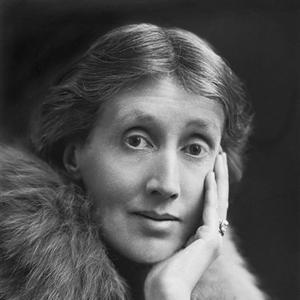
                                                          Virginia Woolf

One book of hers that’s rarely read that I like a lot is Flush: A Biography, which is not at all a biography. It’s the story of the elopement of Elizabeth Barrett and Robert Browning, told from the point of view of her lapdog. Such a strange and beautiful premise, and only Virginia Woolf could actually make this work.

But my favorite novel of Woolf’s is Mrs. Dalloway. To bring to life one day among one circle of friends in the way that she does in that novel, with all the moral and emotional shadings that she exposes, is the literary equivalent of Renoir’s The Luncheon of the Boating Party. I suppose it’s no trick for an author to read the minds of the characters that author herself creates. But if those characters feel like real people, with the longings and failings of real people— the characters in Mrs. Dalloway—then yes, it is a feat to read their thoughts, to sympathize so deeply with such an array of human fates. There is something godlike in Woolf’s compassion and understanding, because it is so wide-ranging, and so wise.

Here’s one of my favorite passages from Mrs. Dalloway, where Clarissa Dalloway is lying down shortly before the party she is throwing that evening, trying to defend herself in her thoughts against the more intellectual and artistic Peter Walsh, the suitor of her youth, a man she refused:

"But suppose Peter said to her, 'Yes, yes, but your parties — what’s the sense of your parties?' all she could say was (and nobody could be expected to understand): They’re an offering; which sounded horribly vague. But who was Peter to make out that life was all plain sailing?—Peter always in love, always in love with the wrong woman? What’s your love? she might say to him."

Why does Mrs. Dalloway call her party an offering, an explanation she doubts anyone will understand? Maybe her party is an offering to personal interactions between individuals, the sorts of interactions that happen at social gatherings such as parties. These interactions are not momentous, but they celebrate and build lasting emotional bonds. Woolf champions the importance of the everyday as opposed to the impulse toward the heroic or the earth-shattering event. It’s the small moments between people that count, both in Woolf’s writing, and in the lives of her characters.

Other recent posts about writing topics: 
Writers I Can't Stop Reading, Part 1, Part 2, Part 3

How to Get Published
Getting the Most from Your Writing Workshop
How Not to Become a Literary Dropout
Putting Together a Book Manuscript
Working with a Writing Mentor
How to Deliver Your Message
Does the Muse Have a Cell Phone?
Why Write Poetry? 
Poetic Forms: Introduction; The Sonnet, The Sestina, The Ghazal, The Tanka

Praise and Lament
How to Be an American Writer


Friday, March 29, 2013

Writers I Can't Stop Reading, Part 1: Introduction

There are certain writers that I start reading, and once I dig into that person’s work, I can’t stop. I have to read all of it. For each writer I feel that way about, there’s a different reason the work is appealing to me.

Then there are other writers I read because someone recommended their work, or I saw an enthusiastic review. I read one book by that author. I might even enjoy the book, but I feel one is enough. I don’t get the sense that I need to know more about that writer’s project or style. I imagine many writers must have those differing responses to what they read. Some writers grab us by the collar and drag us down, and we can’t get loose. Others just give us a sweet little peck on the cheek and bid us farewell.

The writers where I have to read all they wrote, or almost all, are writers who can do something I can’t, or have a quality I’d love to have. I even want to be that writer, at least while I’m reading a book by that author. Sometimes the quality I admire most in that writer is one I hope to emulate. Other times, it’s one I would like to emulate but know I never can. They are just too good at what they do.

In the next few blogs I’m going to discuss some of the writers whose work really grabs me, and why, and some of the writers whose work feels as if I like it, but I don’t need more of it. What differentiates those two types of writers?

T he writers I plan to discuss in this series of blogs include George Orwell, Willa Cather, Virginia Woolf,  June Jordan, and Edna St. Vincent Millay.

Other recent posts about writing topics: 
How to Get Published
Getting the Most from Your Writing Workshop
How Not to Become a Literary Dropout
Putting Together a Book Manuscript
Working with a Writing Mentor
How to Deliver Your Message
Does the Muse Have a Cell Phone?
Why Write Poetry? 
Poetic Forms: Introduction; The Sonnet, The Sestina, The Ghazal, The Tanka

Praise and Lament
How to Be an American Writer


Friday, October 5, 2012

How Not to Become a Literary Dropout, Part 6


One thing that’s vital in sustaining your career as a writer is to keep a balance between your engagement with the world, and your distance from it. Virginia Woolf famously argued that “a woman must have money and a room of her own if she is to write fiction…” By that I think Woolf meant that a writer needs solitude and time to create, two things that are extremely difficult without money and space. 

                                           Virginia Woolf

Solitude and time are often hard to come by in a world filled with jobs, debts, searching for jobs, crowded housing, children, aging parents, problematic relationships, health challenges, and so many other important things to pay attention to. Giving yourself and getting the time to work on your writing is sometimes a matter of complex negotiation with your boss, or your loved ones, or yourself—sometimes the most difficult person to work out a deal with. We risk being accused of selfishness if we demand time for our writing, at the expense of any of our other commitments. There is no easy way to cross this narrow log over the rushing stream. You just have to keep your footing and look straight ahead at the opposite bank.
But distance from the world is not the only thing important to a writer. Immersion in the world is equally important for an author. The things that may be pulling you away from your writing today will be the material for your work in a few years, whether it’s the ones you love, or used to love, or would like to love if only they’d realize how much they need you. It could also be a political cause, your students, or the neighbor you shop for occasionally—all the ways you are knotted to the world are important, both on their own and for your soul as a writer. As Ezra Pound says in ABC of Reading, “More writers fail from lack of character than from lack of intelligence.” And he should know, right? Pound was notorious for being a great stylist with a feeble sense of humanity. Any engagement with the world that builds your character and your soul can ultimately be good for your writing, even if it takes away from your writing time in the short run. 


It is possible to go too far into the room of one’s own, to become so involved in one’s own thoughts and struggles that engagement from the world is weakened. Writers are seekers, aren’t we? Seekers of truth and beauty. But not all seekers are writers, not by a long shot. We’ve all known writers and/or seekers, talented and sensitive souls, whose knots to the world become unraveled because they have gone too deeply into their own thoughts, and their own internal worlds. It’s a real danger, particularly for writers who are among the most visionary and daring, since their minds crave that solitary and unique undersea world of the imagination. It’s best to dive into that world for limited times, to come up for air occasionally, and not resurface too quickly. There is such a thing as getting the bends from a literary standpoint, or having your lifeline cut, and humans can’t live long in the domain of chameleon squids and bioluminescent fish.
That balance between immersion in the world and distance looks different for each person. The Japanese poet Yosano Akiko raised eleven children and helped found a school for girls, but she was still able to write more than 20,000 tanka poems and eleven books of prose, not to mention translate the classic Tale of Genji into contemporary Japanese. For Yosano Akiko, deep immersion in the world was what she needed to harvest the material for her writing. 

                        Yosano Akiko (holding baby) and her family

The poet Frank O’Hara was known for writing his poems in crowded cafes, surrounded by chattering friends. 

                                             Frank O'Hara (left) and friends

For a writer such as the French novelist Marcel Proust, the opposite was true. Proust had only a passing involvement with other people, though he avidly attended Paris salons and entertained guests at the Ritz Hotel, where he lived. He seemed unconnected to people and superficial to many, even to the perceptive. This seemed to be so true of Proust that when he submitted the first volume of his novel, Swann’s Way, the great novelist André Gide rejected the book out of hand for the publisher la Nouvelle Revue Française. Gide just assumed that the Marcel Proust he knew socially could never write a serious book. 

                                         Marcel Proust

Ultimately, Proust lived primarily for his writing, even to the point of befriending people because he thought they would make good characters for his novel In Search of Lost Time, which he spent his whole life writing. The human being Proust may have been closest to was his housekeeper.
From what I’ve heard about him, the Alaskan writer John Haines was most at home as a writer when he lived in a cabin on a homestead far from any city or town. 

                                 John Haines outside his cabin in Alaska

On the other hand, Haines also found time to marry five different women, so he did achieve a counterpoint of his own sort between solitude and engagement.
The balance looks different for each writer, but you have to find that balance for yourself, the one that allows you to be at home both on land and in the kelp forests. Emulate the sea otter, which swims like a fish but breathes the sweet sea air.

Other recent posts about writing topics:

Tuesday, June 5, 2012

Putting Together a Book Manuscript, Part 5: Beginnings

April is the cruellest month, breeding
Lilacs out of the dead land, mixing
Memory and desire, stirring
Dull roots with spring rain.
—T.S. Eliot, The Waste Land

The beginning of T.S. Eliot’s The Waste Land is a perfect example of how to start a book of poetry or shorter prose. It grabs you with the very first phrase: “April is the cruellest month…” But I thought April was the most beautiful month, you say to yourself, when spring gives us such hope? No way, this is a fallen world, where hope only leads to broken promises. Read the rest to find out why, Eliot seems to tell us. And is if to tempt us into the poem, Eliot ends each of the first three lines with a present participle—breeding, mixing, stirring—active words that move us right into the odd reality of this Waste Land, half-dead even while it’s blooming. You can’t help but read on.
The strategies that Eliot uses to begin The Waste Land aren’t necessary for your book, but they demonstrate that the opening needs to snatch our attention away from whatever else we’re thinking, so we focus only on what we’re reading, and we want to read more.
Here’s another good beginning, the opening sentence of Anne Lamott’s book on writing, Bird by Bird: “The very first thing I tell my new students on the first day of a workshop is that good writing is about telling the truth.” A provocative statement, one that makes you want to find out more. Why is good writing about telling the truth? What does she mean by telling the truth?
And then there’s the beginning of Virginia Woolf’s famous essay, A Room of One’s Own: “But, you may say, we asked you to speak about women and fiction—what has that got to do with a room of one’s own?” Woolf throws down the gauntlet right from the start. I’m going to break the rules now, she’s saying. Watch me. And she starts with a question, a terrific way to bring the reader into the argument. What does a room of one’s own have to do with women and fiction? Everything, we now know because of Woolf, but back then, she was starting her essay with a total surprise.
Let’s look at the first sentence of Sherman Alexie’s book of connected short stories, The Lone Ranger and Tonto Fistfight in Heaven: “Although it was winter, the nearest ocean four hundred miles away, and the Tribal Weatherman asleep because of boredom, a hurricane dropped from the sky in 1976 and fell so hard on the Spokane Indian Reservation that it knocked Victor from bed and his latest nightmare.” Alexie gives us humor, action, and unpredictable events, all in the first sentence. You just have to read on to find out what it’s all about.
The first sentence or the first few lines of a book (in the case of poetry) have to make the reader want to read on. You’ve got to win the reader’s attention immediately. Readers may encounter your book in a library or a bookstore, where there are many other books competing for their interest.
So let’s say you’re putting together a collection of poetry or short stories or essays. Which piece do you choose to put first? Well, I’d say one with an engaging beginning. One that fulfills its promise, and gives the reader the sense that this book will delight and/or instruct, and not disappoint.
You wouldn’t start with the poem or story or essay that is the crux of the collection. You don’t want to give away the ending at the beginning. You want to work up to the climatic moment.
James Joyce holds back the story “The Dead,” the masterpiece of his book of short stories Dubliners, till the very end. He starts the collection with a relatively minor story, “The Sisters,” but one that opens with a crisp first sentence and a page of dialogue, an engaging beginning. “The Sisters” introduces some of the themes of Dubliners, with its narrative about a priest who goes mad after accidentally dropping a sacred chalice. The story’s exposé of the stultifying conventions of life in the Ireland of Joyce’s day echoes throughout the book. But the ultimate laying bare of that situation doesn’t come until the end of the very last story in the collection.
The beginning of a book should provide an active introduction to the book’s themes, it should start on an exciting note, and it should present the dilemma of the book without resolving it.